MicrobeBio® Peanut Growth Program: Questions & Answers for Higher Yields, Better Pod Filling, and Healthier Soils
MicrobeBio® Peanut Growth Program
Questions & Answers for Stronger Roots, Better Nodulation, Healthier Plants, and Higher Yields
Peanut (Groundnut) production depends on healthy roots, effective nitrogen fixation, abundant flowering, successful peg formation, and proper pod filling. MicrobeBio® biological solutions support every stage of peanut development by enhancing soil biology, nutrient cycling, stress tolerance, and natural plant defenses.
Q1. Why is understanding the peanut growth cycle important?
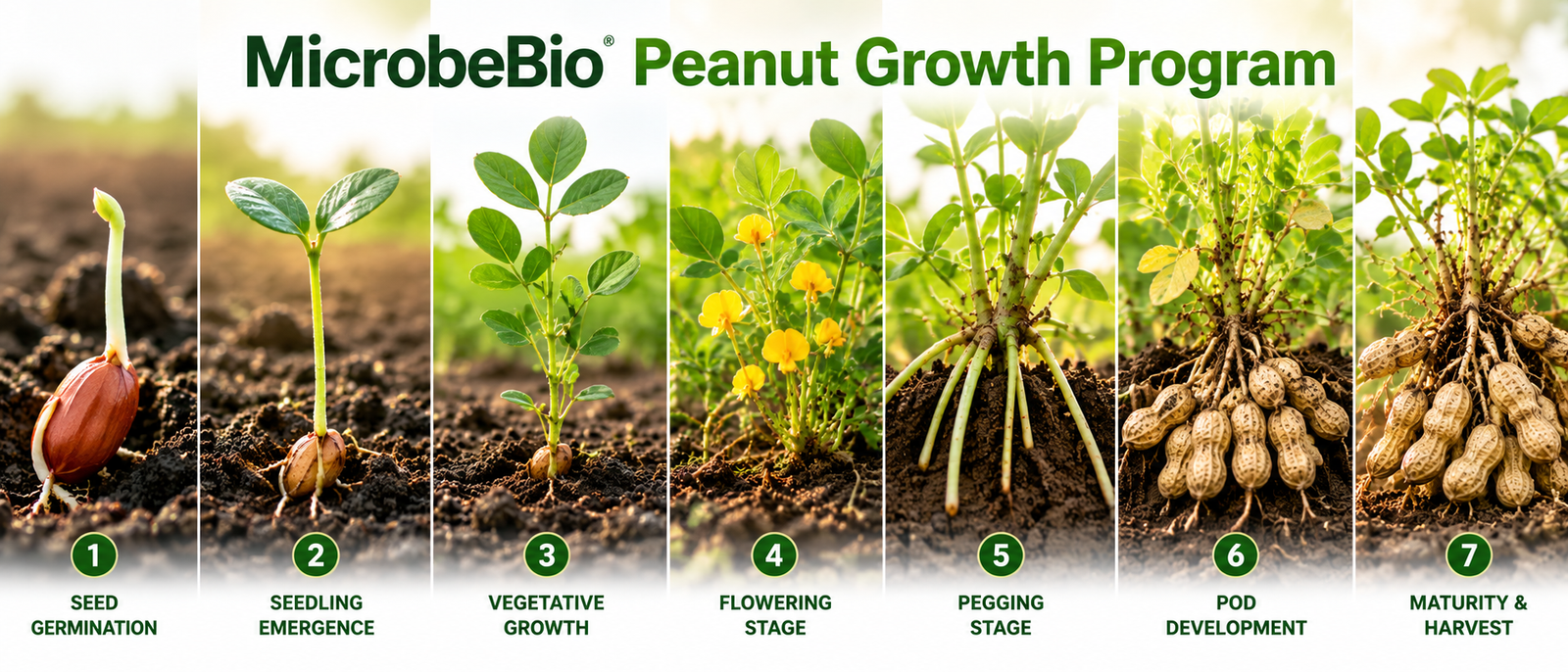
Peanuts pass through several stages:
Vegetative Stage (0–35 Days)
Development of:
-
Roots
-
Nodules
-
Leaves
-
Stems
Reproductive Stage (35–120 Days)
Development of:
-
Flowering
-
Peg formation
-
Pod development
-
Seed filling
-
Maturity
Healthy vegetative growth establishes the foundation for maximum yield and pod quality.
Recommended MicrobeBio Program
- X1™
- Rhizo Activator™
- Nature Vigor™
- Aqua Activator™
Mechanism of Action
Beneficial microorganisms:
-
Colonize the rhizosphere
-
Produce auxins and cytokinins
-
Increase root biomass
-
Enhance biological nitrogen fixation
-
Improve nutrient uptake
Benefits
- Faster emergence
- Strong root development
- Better nodulation
- Higher nutrient efficiency
Q2. What is the ideal soil for peanut production?
Peanuts grow best in:
- Sandy loam to loamy soils
- Good drainage
- pH 5.8–7.0
- High organic matter
Avoid:
- Waterlogging
- Soil compaction
- Salinity
Recommended Products
Nature Vigor™
Improves organic matter and moisture retention.
X1™
Enhances root colonization and nutrient cycling.
Rhizo Activator™
Supplies slow-release organic nutrients.
Hydro Activator™
Provides amino acids and biological nutrition.
Benefits
- Better soil structure
- Increased water holding capacity
- Higher microbial diversity
- Improved nutrient availability
Q3. How does MicrobeBio improve vegetative growth?
Healthy leaves supply energy for flowering and pod development.
Recommended Products
- Aqua Activator™
- Hydro Activator™
- Foliar™
Mode of Action
Stimulates:
-
Photosynthesis
-
Chlorophyll production
-
Stomatal activity
-
Amino acid metabolism
Benefits
- Dark green foliage
- Strong stems
- Greater leaf area
- Increased energy production
Q4. Which products improve flowering and peg formation?
Flowering and peg penetration are critical for pod development.
Recommended Products
- Aqua Activator™
- Hydro Activator™
- Foliar™
Benefits
- More flowers
- Better peg formation
- Increased pod set
- Reduced flower abortion
Q5. How does MicrobeBio improve pod filling and seed quality?
During pod filling, plants require efficient nutrient transport and strong photosynthesis.
Recommended Products
- Aqua Activator™
- Hydro Activator™
- Foliar™
Benefits
- Larger pods
- Better seed size
- Higher oil content
- Increased protein content
- Improved market quality
Q6. How can MicrobeBio help control peanut diseases?
Major diseases include:
-
Early leaf spot
-
Late leaf spot
-
Rust
-
Stem rot
-
Southern blight
-
Rhizoctonia
-
Pythium
-
Aspergillus flavus
-
Aflatoxin contamination
Recommended Product
MicrobeBio X5™
Mechanism of Action
Beneficial microbes:
Competition
Occupy root and leaf surfaces before pathogens.
Antibiosis
Produce natural antifungal metabolites.
Enzyme Production
Release:
-
Chitinases
-
Cellulases
-
Glucanases
Induced Systemic Resistance
Stimulate the plant’s natural defense system.
Benefits
- Reduced disease pressure
- Healthier roots
- Improved plant vigor
- Better seed quality
- Lower aflatoxin risk
Q7. Which insects attack peanuts and how does MicrobeBio help?
Common pests:
-
Thrips
-
Aphids
-
Armyworms
-
Cutworms
-
White grubs
-
Leaf miners
-
Spider mites
Recommended Product
MicrobeBio X3™
Mode of Action
Entomopathogenic microorganisms:
-
Infect insect cuticles
-
Produce insecticidal metabolites
-
Reduce feeding and reproduction
Benefits
- Reduced insect damage
- Healthier canopies
- Lower virus transmission
Q8. Which MicrobeBio programs are recommended by country?
|
Country
|
Major Challenges
|
Recommended Program
|
|---|---|---|
|
USA
|
Leaf spot, drought
|
X1 + X5 + Aqua Activator
|
|
India
|
Rust, stem rot
|
X1 + X5 + Hydro Activator
|
|
Vietnam
|
High humidity and leaf diseases
|
X5 + X3 + Aqua Activator
|
|
Cambodia
|
Heavy rainfall and nutrient leaching
|
Nature Vigor + X1 + Hydro Activator
|
|
China
|
Soil compaction and disease
|
X1 + Rhizo Activator + X5
|
|
Nigeria
|
Drought and poor fertility
|
Nature Vigor + Hydro Activator
|
|
Argentina
|
Leaf spots and pod filling
|
Aqua Activator + X5 + Foliar
|
Q9. How does MicrobeBio support every part of the peanut plant?
|
Plant Part
|
MicrobeBio Support
|
|---|---|
|
Roots
|
X1™, Rhizo Activator™
|
|
Nodules
|
X1™, Nature Vigor™
|
|
Leaves
|
Aqua Activator™, Foliar™
|
|
Flowers
|
Aqua Activator™
|
|
Pegs
|
Hydro Activator™
|
|
Pods
|
Hydro Activator™, Foliar™
|
|
Soil Biology
|
Nature Vigor™, X1™
|
|
Disease Protection
|
X5™
|
|
Insect Protection
|
X3™
|
Why Grow Peanuts with MicrobeBio®?
MicrobeBio® biological technologies help support:
- Strong root systems
- Increased nitrogen fixation
- More flowers and pegs
- Better pod filling
- Reduced disease pressure
- Natural insect management
- Healthier living soils
- Higher yields and profitability
SEO Keywords
Peanut growth stages, groundnut production, peanut disease control, biological fungicide for peanuts, peanut root development, pod filling, nitrogen fixation, regenerative agriculture, beneficial microbes for peanuts, MicrobeBio peanut program.
Trending Hashtags
#MicrobeBio #PeanutFarming #Groundnut #PeanutProduction #SoilHealth #NitrogenFixation #Biostimulants #Biofertilizer #PlantHealth #CropProtection #RegenerativeAgriculture #SustainableAgriculture #HighYieldPeanuts #HealthyRoots #GrowWithMicrobeBio