Microbial Soil Mechanisms: How Microbes Build, Restore, and Supercharge Soil
Microbes (bacteria, fungi, actinomycetes, archaea, and others) are the invisible workforce driving soil formation, nutrient cycling, structure, and plant health. In the context of the “500-Year Recipe for Dirt,” they accelerate pedogenesis by turning rock into living topsoil far faster than abiotic processes alone. MicrobeBio products deliver optimized consortia of these microbes (often 35+ strains) to amplify these mechanisms in agricultural settings.
1. Bioweathering: Breaking Down Rock & Releasing Nutrients
- Microbes secrete organic acids (e.g., citric, oxalic), enzymes, and chelating agents (siderophores) that dissolve minerals in parent material and bedrock.
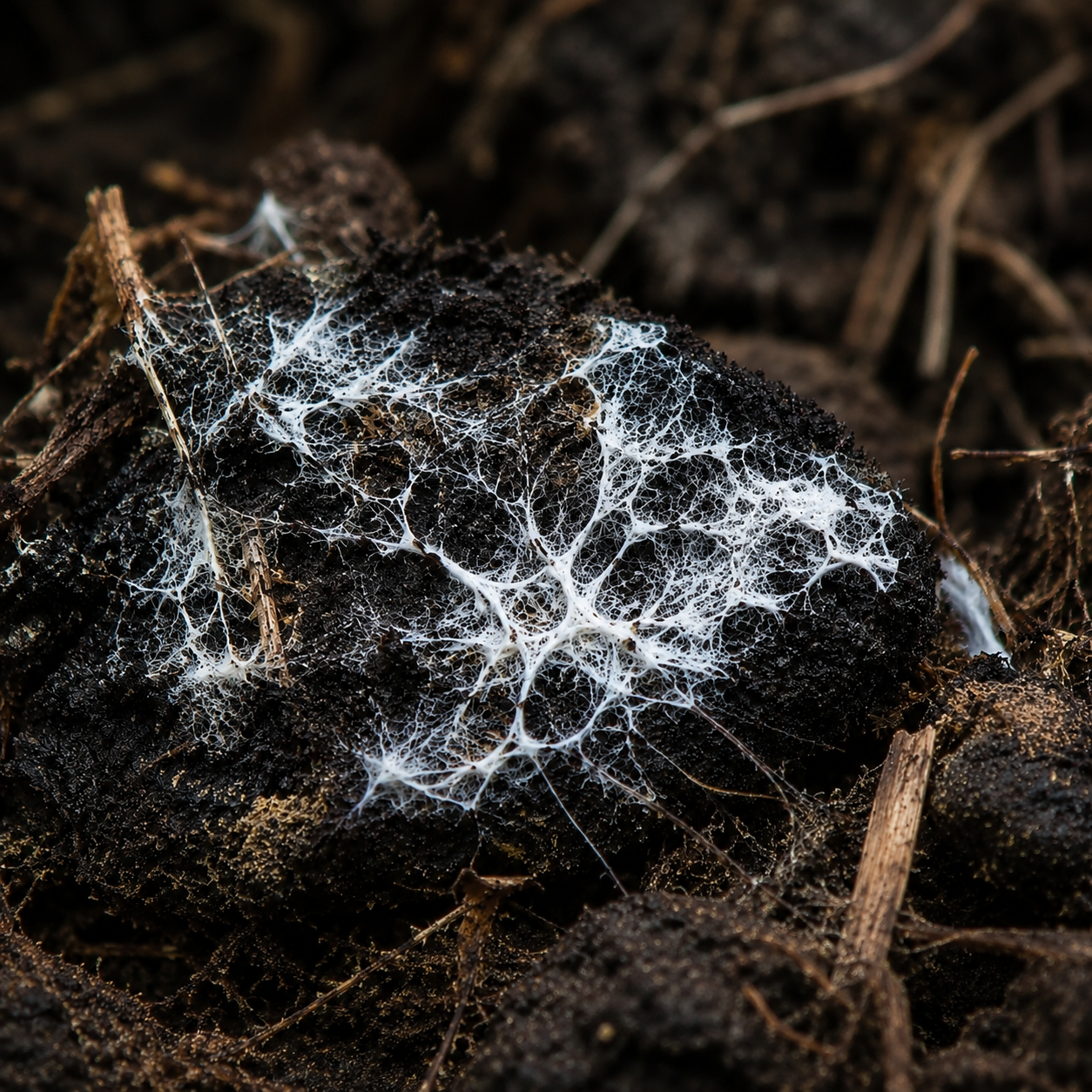
- Fungi (mycorrhizal and saprotrophic) physically penetrate rock with hyphae.
- Bacteria oxidize minerals (e.g., iron) for energy, releasing bound phosphorus, potassium, calcium, magnesium, and trace elements.
- Result: Faster conversion of inert rock particles into plant-available forms. This is the foundation of new soil horizons.
2. Decomposition & Humus Formation (Building Organic Matter)
- Microbes break down plant residues, root exudates, and dead microbial biomass.
- Much stable soil organic matter (SOM/humus) comes from microbial necromass (dead cells) and byproducts rather than undecomposed plant material.
- Fungi excel at breaking down tough compounds like lignin and chitin.
- Result: Rapid accumulation of stable carbon that improves fertility, water retention, and cation exchange capacity (CEC). This is how MicrobeBio helps build topsoil inches in seasons instead of centuries.
3. Nutrient Cycling & Fixation
- Nitrogen fixation: Free-living or symbiotic bacteria convert atmospheric N₂ into ammonia.
- Mineralization: Microbes convert organic N, P, and S into inorganic forms plants can use.
- Phosphate solubilization: Bacteria and fungi release organic acids to unlock bound phosphorus.
- Result: More efficient nutrient availability, reduced fertilizer needs, and better plant nutrition. MicrobeBio strains enhance these cycles directly in the rhizosphere (root zone).
4. Soil Aggregation & Structure Improvement
- Bacteria produce polysaccharides (sticky glues).
- Mycorrhizal fungi produce glomalin, a glycoprotein that binds particles into stable aggregates.
- Result: Improved porosity, water infiltration/retention, aeration, and erosion resistance. Healthy aggregates protect organic matter and create habitats for more life.
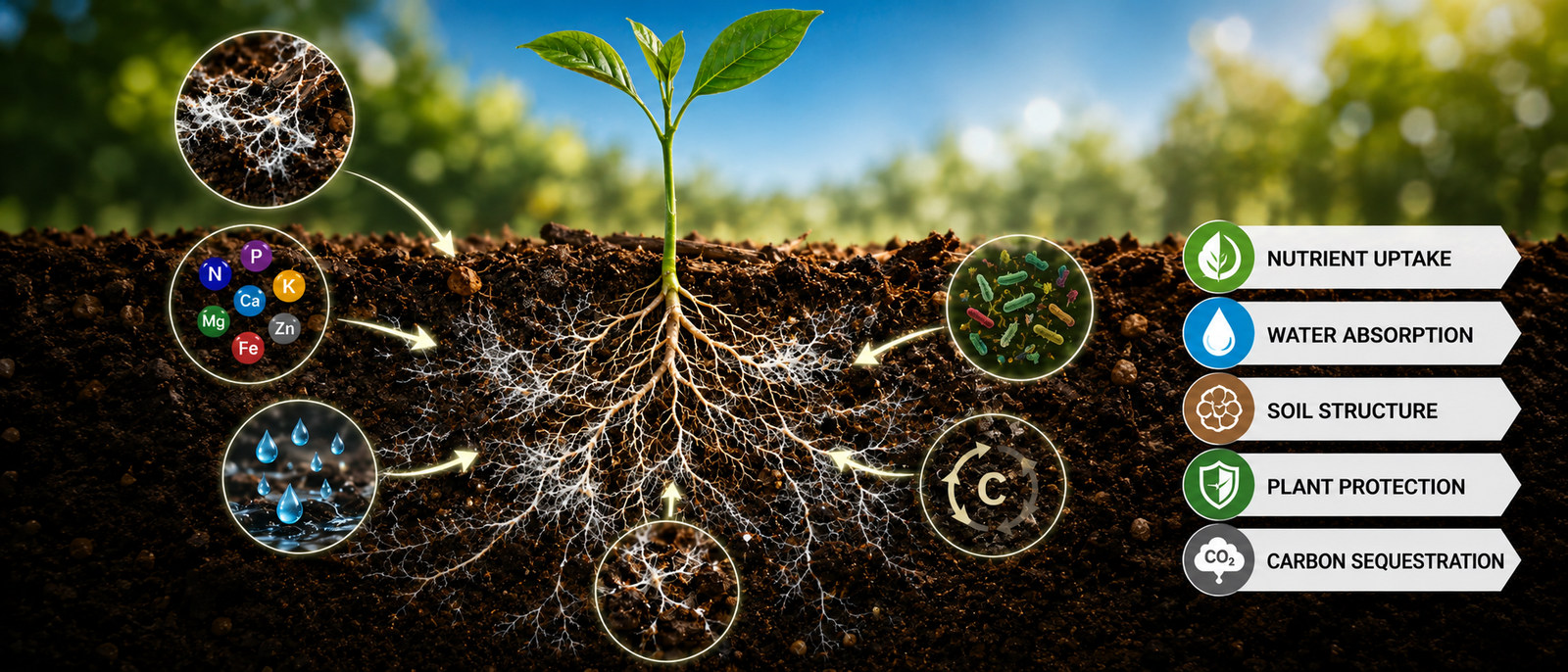
5. Plant-Microbe Symbiosis (The Rhizosphere Engine)
- Plants exude sugars and compounds to feed microbes.
- In return, microbes extend root reach (mycorrhizae), produce growth-promoting hormones, suppress pathogens via competition/antibiotics, and improve stress tolerance (drought, salinity).
- Result: Stronger roots, higher yields, and a self-reinforcing feedback loop that accelerates overall soil building.
How MicrobeBio Products Activate These Mechanisms
- Nature Vigor™ & Similar Formulations: Energize native microbes + introduce superior strains. Contain humic carbon for immediate food, amino acids, and microbes that boost CEC, remineralization, water holding, and microbial activity.
- Rhizo Activator™: Granular with mycorrhizae and Trichoderma for rhizosphere development, nutrient uptake, and vigor.
- Overall Effect: Inoculation + organic inputs creates a thriving soil food web, turning degraded or slow-forming soil into productive, regenerative farmland much faster.
Practical Takeaway for Farmers: These mechanisms work synergistically. Applying MicrobeBio products alongside reduced tillage, cover crops, and organic matter inputs creates exponential gains in soil health, crop resilience, and yields while rebuilding topsoil over time.
This is the science behind shifting from “500 years” to “a few seasons.” If you’d like diagrams, deeper dives into specific strains, application protocols, or visuals tailored to certain crops (e.g., your corn or rice projects), just say the word!