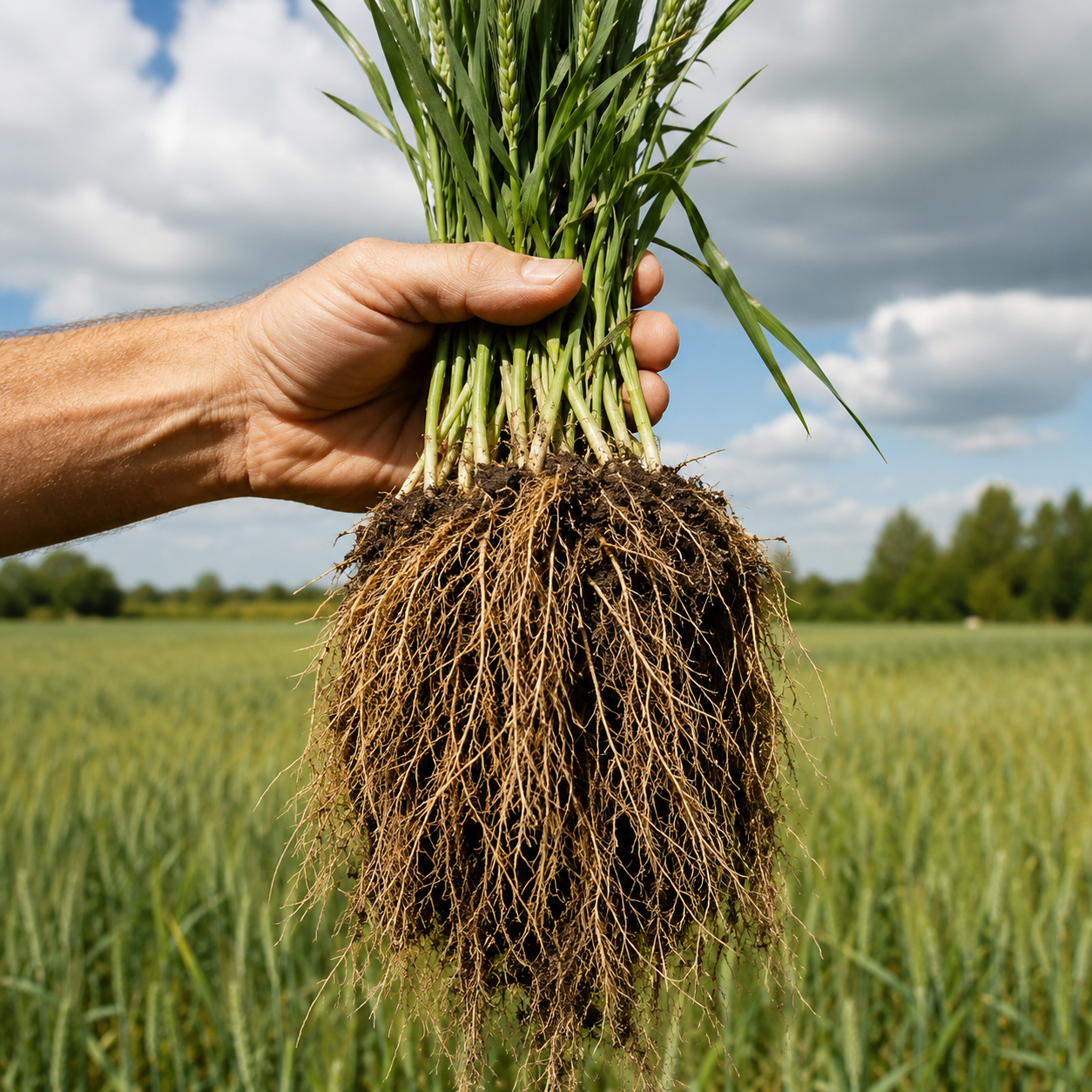
Bioweathering Mechanisms: How Microbes Actively Break Down Rock and Build Soil
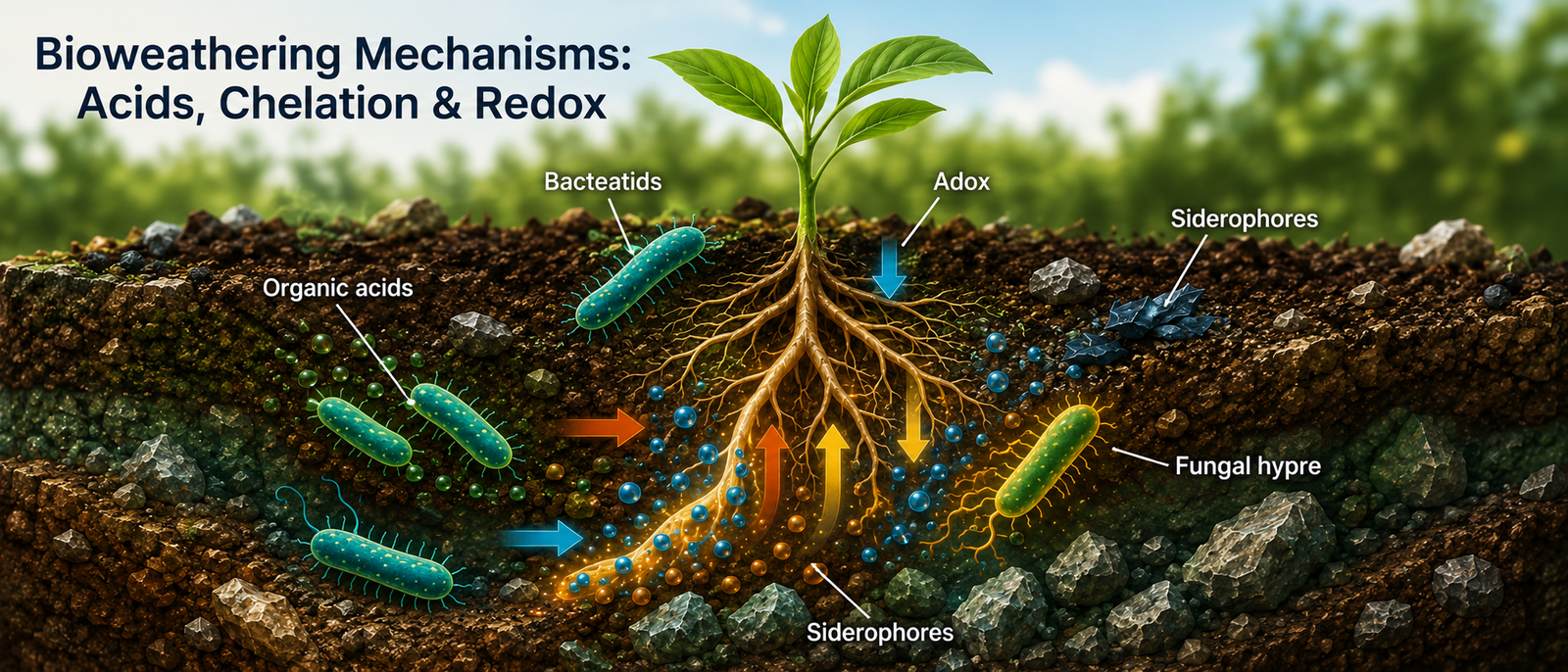
Bioweathering (or biological weathering) is the process by which living organisms — especially microbes (bacteria, fungi, archaea) — accelerate the breakdown of rocks and minerals into soil particles. It complements physical (freeze-thaw, abrasion) and chemical weathering but is often the most powerful driver in soil formation (pedogenesis). In the context of MicrobeBio, these mechanisms allow targeted microbial products to dramatically speed up the “500-year recipe” for topsoil.
Key Bioweathering Mechanisms
- Acid Production and pH Lowering
- Microbes secrete organic acids (citric, oxalic, gluconic, lactic) and inorganic acids (e.g., sulfuric from sulfur-oxidizing bacteria).
- These acids dissolve mineral bonds in rocks (e.g., silicates, carbonates), releasing cations like Ca²⁺, Mg²⁺, K⁺, Fe²⁺/³⁺, and trace elements.
- Example: Fungi in the rhizosphere exude acids that etch mineral surfaces, creating micro-pores.
- Chelation and Ligand-Promoted Dissolution
- Production of siderophores and other chelating agents that bind metal ions (especially iron), pulling them out of mineral structures.
- This destabilizes the crystal lattice, making minerals more soluble.
- Common in both bacteria and fungi; highly effective in nutrient-poor or alkaline soils.
- Redox Reactions (Oxidation-Reduction)
- Bacteria perform oxidation of minerals (e.g., Fe²⁺ to Fe³⁺ or Mn²⁺ to Mn⁴⁺), which weakens rock structure and releases energy for the microbes.
- Some use minerals as electron acceptors in anaerobic conditions.
- This is particularly important in deep subsurface or waterlogged soils.
- Physical Penetration and Biofilm Action
- Fungal hyphae physically bore into rock fractures and grain boundaries, causing mechanical stress and increasing surface area for chemical attack.
- Microbial biofilms create micro-environments with concentrated acids, enzymes, and concentrated CO₂, amplifying weathering locally.
- Enzyme Secretion
- Extracellular enzymes break down organic coatings on minerals or facilitate direct mineral dissolution.

Why Bioweathering Matters for Soil Formation & Agriculture
- Accelerates Pedogenesis: Turns barren bedrock into mineral substrate for plants and organic matter accumulation.
- Nutrient Release: Unlocks essential elements that would otherwise remain unavailable.
- MicrobeBio Advantage: Products like Nature Vigor™ and Rhizo Activator™ introduce high-performance strains optimized for these processes, combined with humics that support microbial activity. This compresses centuries of slow natural weathering into seasons, especially when paired with cover crops or organic amendments.
Real-World Impact: In degraded or tropical soils (common in your Venezuela/DR projects), bioweathering via inoculated microbes improves phosphorus availability, reduces reliance on mined fertilizers, and builds soil structure faster.