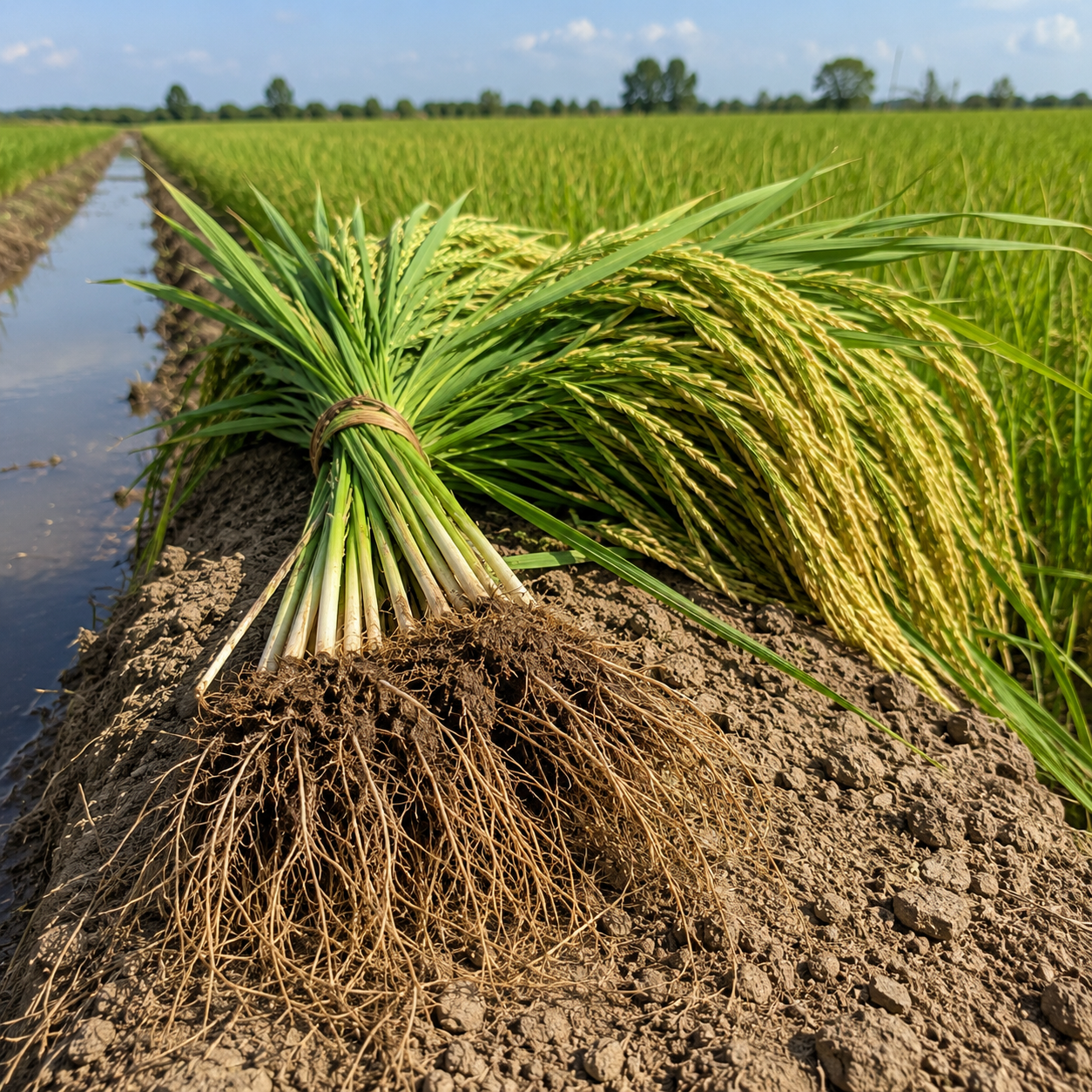
Fungal Siderophore Chemistry: High-Affinity Iron Chelation for Bioweathering and Nutrient Acquisition
Siderophores (from Greek: “iron carriers”) are small, water-soluble, low-molecular-weight compounds (<1,000 Da) produced by bacteria, fungi, and some plants under iron-limiting conditions. They bind Fe³⁺ with extremely high affinity (stability constants often log K = 20–52), solubilizing otherwise insoluble iron from minerals and making it bioavailable.
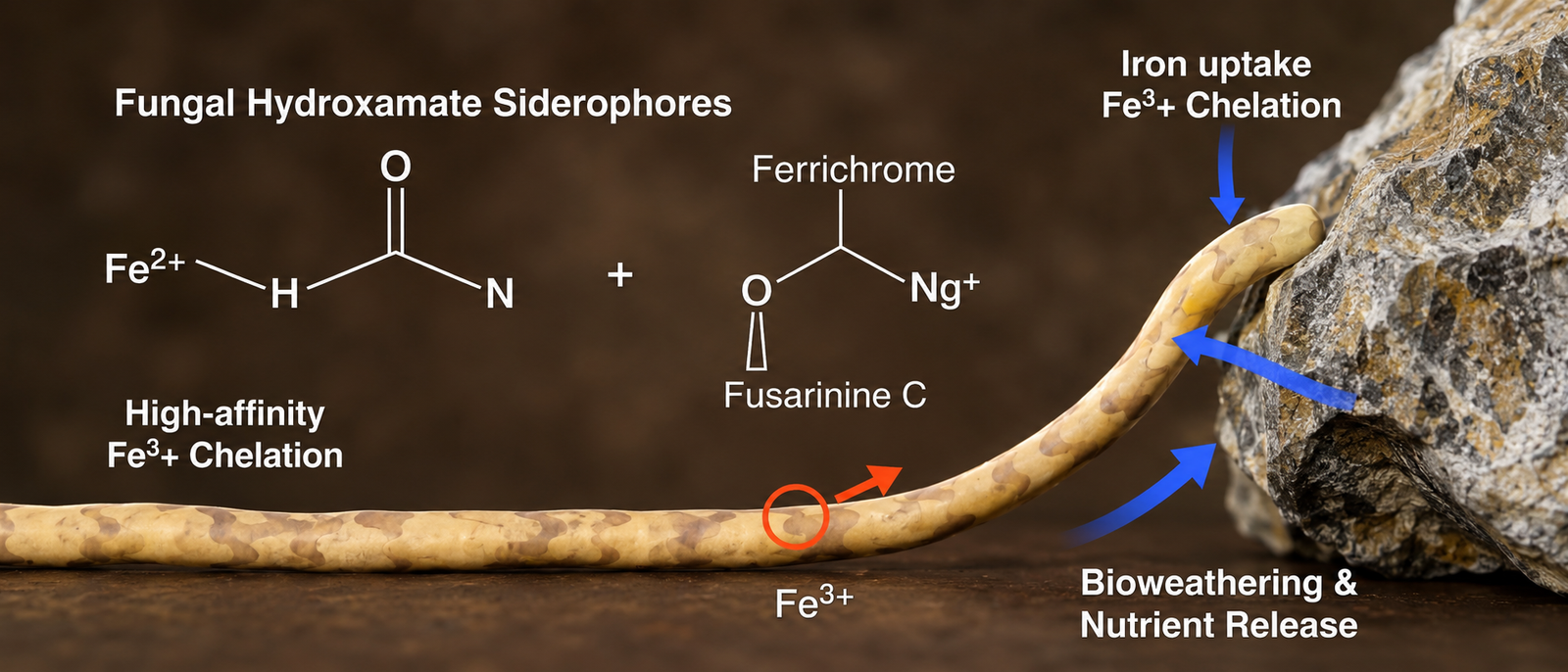
Fungi rely heavily on hydroxamate-type siderophores (unlike many bacteria that favor catecholates). These are built around N-hydroxyornithine units, which provide the key bidentate hydroxamate ligands (-C(O)N(OH)-) that coordinate iron.
Chemical Classification and Structures of Fungal Siderophores
Fungal siderophores are primarily hydroxamates and fall into several families:
- Ferrichromes — Cyclic hexapeptides (e.g., ferrichrome from Ustilago sphaerogena and many Aspergillus/Penicillium species). Highly stable and resistant to enzymatic degradation in soil. Structure: Three N⁵-acyl-N⁵-hydroxyornithine residues forming a cyclic peptide.
- Fusarinines (e.g., fusarinine C) — Often linear or cyclic trihydroxamates from Fusarium species. Produced via iterative non-ribosomal peptide synthesis.
- Coprogens — Linear hydroxamates common in many fungi.
- Rhodotorulic acid — A simple dimer of N-acetyl-N-hydroxyornithine (from Rhodotorula yeasts).
Core Chemistry:
- Hexadentate octahedral complex with Fe³⁺: Three bidentate hydroxamate groups satisfy the six coordination sites of iron, forming a very stable, high-spin complex.
- Hydroxamate groups are excellent Fe³⁺ chelators due to their hard oxygen donor atoms, which match the hard Lewis acid character of Fe³⁺.
- They show much lower affinity for Fe²⁺, allowing easy intracellular release via reduction.
Fungi also produce some carboxylate or mixed-type siderophores, but hydroxamates dominate.

Biosynthesis and Transport
- Biosynthesis: Catalyzed by non-ribosomal peptide synthetases (NRPS). For example, the bimodular NRPS SidD iteratively loads and condenses cis-AMHO (N⁵-cis-anhydromevalonyl-N⁵-hydroxyornithine) to build fusarinine C.
- Uptake: Specific Siderophore Iron Transporters (SITs) in the fungal plasma membrane recognize and import the Fe³⁺-siderophore complex.
- Iron Release: Inside the cell, iron is typically released by enzymatic reduction to Fe²⁺ (which has low affinity for the siderophore) or by hydrolysis of the siderophore.
Role in Bioweathering and Soil Ecosystems
Fungal siderophores are powerful drivers of mineral dissolution:
- They chelate Fe³⁺ directly from iron oxides, silicates, and other minerals at the hyphal-mineral interface.
- This shifts chemical equilibria, accelerating proton-promoted and ligand-promoted dissolution.
- Combined with fungal hyphal penetration (physical weathering) and acid secretion, they significantly enhance rock breakdown and nutrient release (Fe, and indirectly other metals).
- In soil, they improve iron bioavailability for microbes and plants, supporting the broader microbial food web and humus formation.
Mycorrhizal fungi use siderophores to help host plants acquire iron, especially in alkaline or iron-poor soils — a key benefit in regenerative agriculture.
Relevance to MicrobeBio and Agriculture
MicrobeBio products incorporate beneficial fungi (mycorrhizae, Trichoderma, etc.) that naturally produce these siderophores. This contributes to:
- Enhanced iron nutrition for crops.
- Improved bioweathering and nutrient cycling in soil.
- Better plant growth promotion and stress tolerance.
- Reduced need for synthetic iron fertilizers.
Fungal siderophores also play roles in biocontrol (competing with pathogens for iron) and can be part of “Trojan horse” strategies in research for targeted delivery.
Summary: Fungal siderophores are elegant hydroxamate-based chelators optimized for iron scavenging in diverse environments. Their chemistry enables efficient bioweathering, making them central to how microbes (and MicrobeBio inoculants) accelerate soil formation and support sustainable agriculture.
Would you like deeper details on specific structures (e.g., ferrichrome vs. fusarinine), biosynthesis pathways, comparisons with bacterial siderophores, or integration into more visuals/video frames for MicrobeBio marketing?