
Siderophore Role in Biocontrol: Iron Starvation as a Natural Disease Suppression Strategy
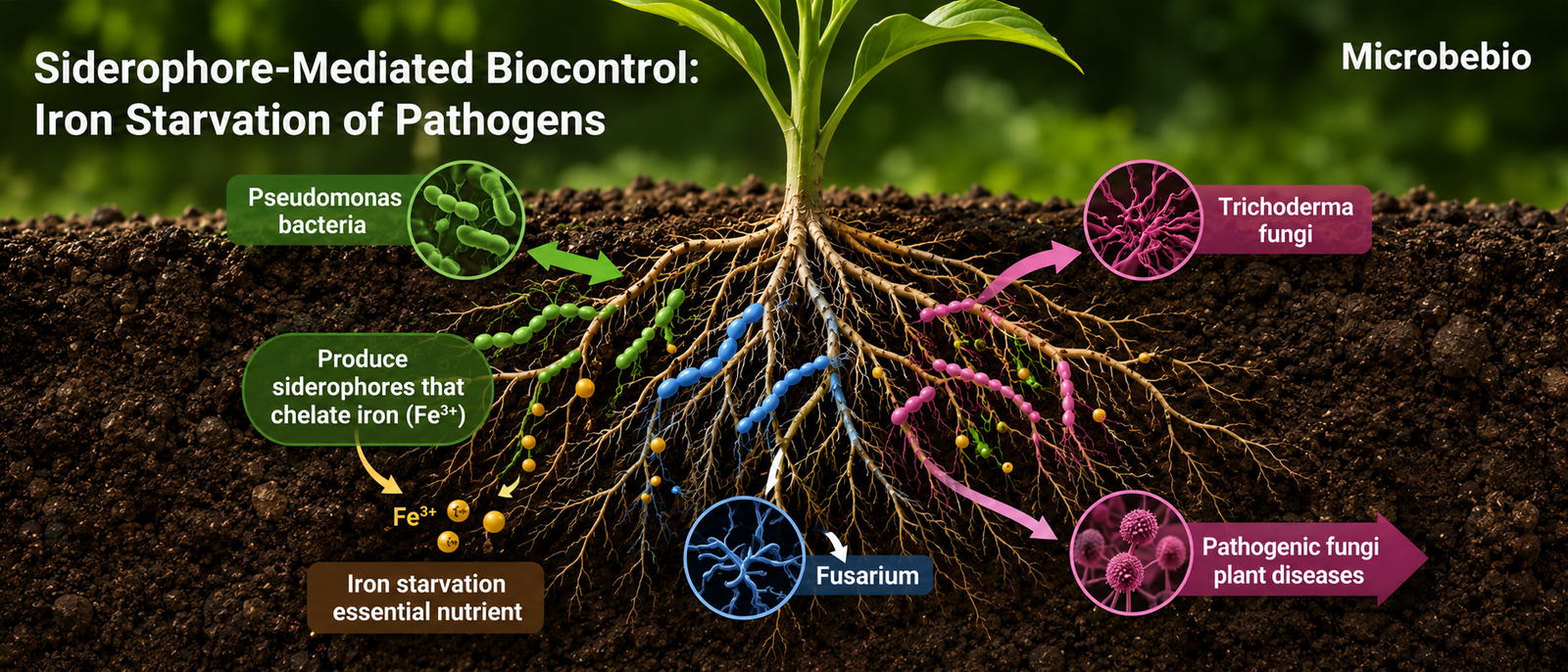
Siderophores play a powerful role in biocontrol (biological control of plant pathogens) by enabling beneficial microbes to outcompete harmful ones for a critical resource: iron (Fe). This mechanism is especially valuable in sustainable agriculture as an eco-friendly alternative or complement to chemical pesticides.
Core Mechanism: Iron Competition (Nutrient Starvation)
Under iron-limiting conditions (common in many soils, especially alkaline ones), both beneficial and pathogenic microbes produce siderophores to scavenge Fe³⁺.
- Beneficial microbes (e.g., Pseudomonas, Bacillus, Trichoderma) produce high-affinity siderophores that tightly bind and sequester available iron in the rhizosphere.
- Pathogens (e.g., Fusarium oxysporum, Pythium, Ralstonia solanacearum, Erwinia) are starved of iron, impairing their growth, sporulation, toxin production, and virulence.
- This creates a competitive advantage for the beneficial strains that colonize roots and niches first.
This is often called “iron starvation” or nutrient competition — one of the key indirect biocontrol mechanisms alongside antibiosis (antibiotic production), parasitism, and induced systemic resistance (ISR).
Key Examples in Biocontrol
- Pseudomonas fluorescens / putida (fluorescent pseudomonads): Produce pyoverdine (a hydroxamate/catecholate siderophore). Highly effective against Fusarium wilt, take-all disease (Gaeumannomyces graminis), and bacterial soft rot. Pyoverdine not only starves pathogens but can have direct antifungal effects.
- Trichoderma spp. (fungal biocontrol agents): Produce hydroxamate siderophores. Excellent against soil-borne fungal pathogens like Fusarium, Rhizoctonia, and Pythium. Often works synergistically with bacteria.
- Bacillus subtilis and other PGPR: Contribute siderophores that suppress Sclerotium rolfsii and other pathogens.
- Mycorrhizal fungi and consortia: Enhance iron nutrition for plants while limiting pathogen access.
Studies show siderophore-producing strains can reduce disease incidence by 40–70% in various crops when iron competition is the dominant factor.

Additional Biocontrol Mechanisms Involving Siderophores
- Antibiosis synergy: Some siderophores have direct antimicrobial properties or work alongside antibiotics and lytic enzymes (chitinases, proteases).
- Niche exclusion: Beneficial microbes rapidly colonize roots and use siderophores to dominate the iron pool.
- Interference with pathogen signaling: Iron limitation disrupts pathogen gene expression related to virulence.
- Consortia effects: Diverse siderophores from microbial communities (bacteria + fungi) create a stronger “iron lock” that pathogens struggle to overcome. Some beneficial strains can even “cheat” by using pathogen-produced siderophores.
Benefits for Sustainable Agriculture & MicrobeBio Context
- Dual action: Siderophores promote plant growth (by improving iron availability to crops via specific uptake systems) while suppressing disease.
- Eco-friendly: Reduces reliance on synthetic fungicides and fertilizers.
- Broad-spectrum potential: Effective against both fungal and bacterial pathogens.
- In MicrobeBio products: The consortia of bacteria and fungi (including mycorrhizae and Trichoderma-like strains) in products like Nature Vigor™ and Rhizo Activator™ leverage siderophore production for enhanced biocontrol, nutrient cycling, and soil health in crops such as corn, rice, and vegetables.
Limitations & Considerations:
- Efficacy depends on soil pH, iron levels, specific siderophore affinity, and whether pathogens have compatible receptors or can “cheat.”
- Works best as part of an integrated approach (with organic matter, reduced tillage, etc.).
- Environmental factors and microbial community dynamics influence performance.