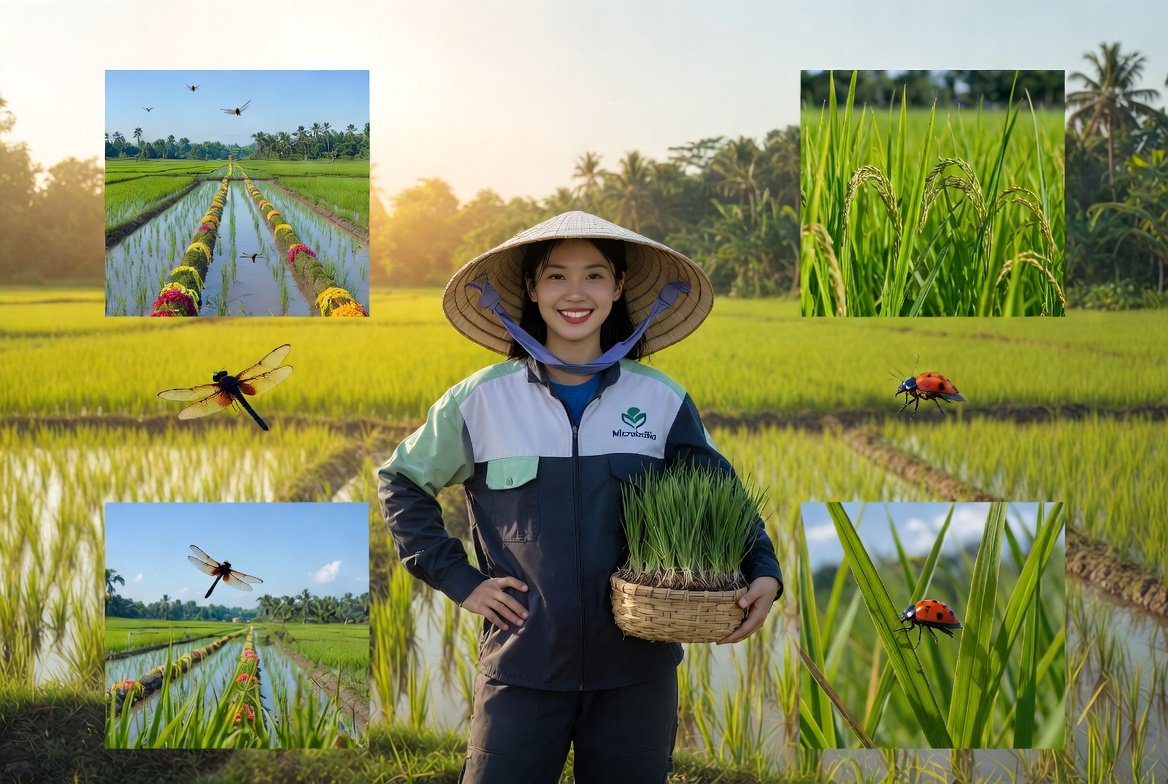
🌾 Build a Natural Army in Your Southeast Asian Rice Field: Flowers That Control Pests Naturally
Stem borers tunneling inside your stalks, brown planthoppers sucking sap and spreading viruses, leaf folders rolling your leaves, rice bugs damaging grains, and gall midges attacking young plants — these are the major challenges every season across Vietnam, Thailand, Philippines, Indonesia, Cambodia, and beyond.
Heavy insecticide use is expensive, creates resistance, pollutes water, and kills the beneficial insects that could help you.
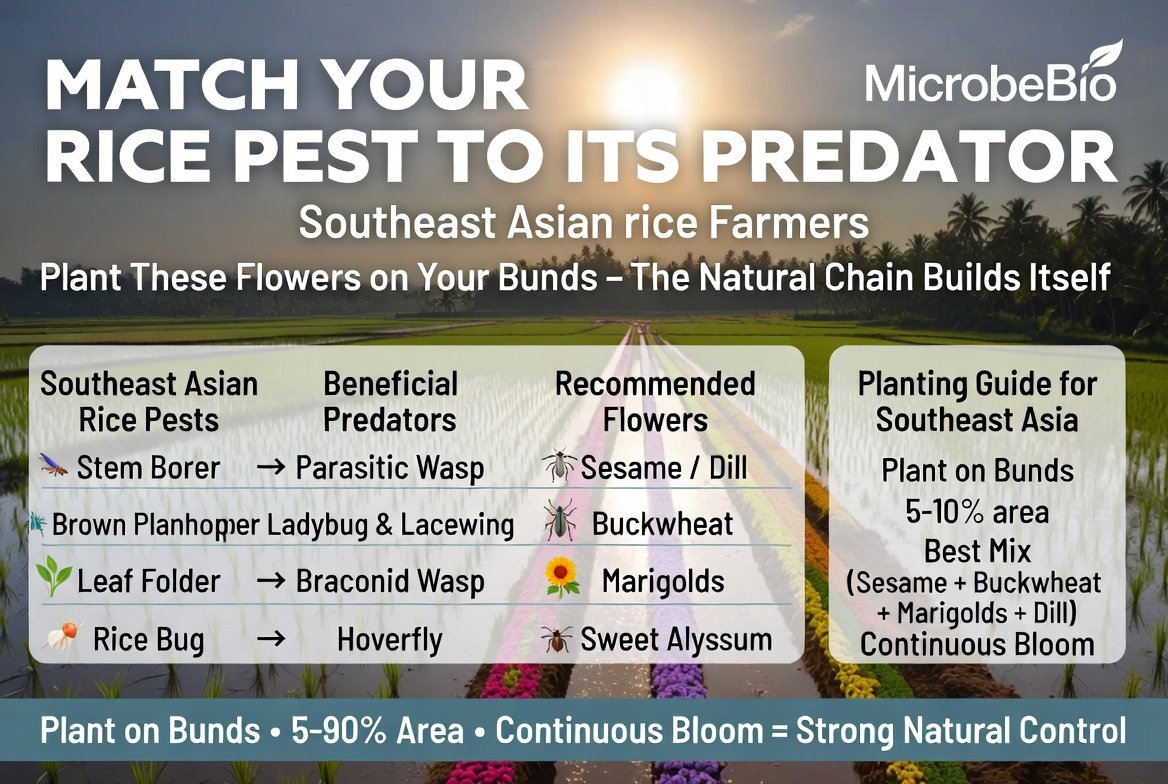
The smart solution gaining popularity across Southeast Asia is Ecological Engineering: planting nectar-rich flowers on your rice bunds to attract and keep natural predators and parasitic wasps in your field.
Why This Works Extremely Well in Southeast Asia
This method has been widely researched and adopted in Vietnam, Thailand, and the Philippines. Farmers using flower borders on bunds have reduced insecticide sprays by up to 60-70% while maintaining or increasing yields.
Best Flowers & Plants for Southeast Asian Rice Fields
| Plant/Flower | Predators Attracted | Main Rice Pests Controlled | Recommended Planting |
|---|---|---|---|
| Sesame | Parasitic wasps, predatory bugs | Stem borers, planthoppers | Year-round, best at season start |
| Buckwheat | Tachinid flies, parasitic wasps, hoverflies | Stem borers, leaf folders, planthoppers | Every 4–6 weeks |
| Marigolds (French) | Parasitic wasps | General pests, nematodes | Every 2–3 months |
| Dill, Fennel, Cilantro | Tiny parasitic wasps (Trichogramma) | Stem borers, leaf folders | Allow to flower |
| Sweet Alyssum | Lacewings, hoverflies, ladybugs | Aphids, planthoppers, small insects | Continuous ground cover |
| Vetiver Grass | Habitat + trap crop | Stem borers | Permanent on bund edges |
Best Mix: Sesame + Buckwheat + Marigolds + Dill for continuous nectar throughout the season.
How to Implement on Your Rice Farm
- Plant on Bunds — The raised levees between paddies are perfect. Plant in 30–60 cm wide strips on bunds.
- Target Area — Aim for 5–10% of your field area in flowering plants.
- Timing (Tropical Southeast Asia):
- Sow at the same time or 1–2 weeks before rice transplanting.
- Re-sow buckwheat and alyssum every 4–6 weeks.
- Start Small — Test on a few paddies this season.
- Protect Beneficials — Minimize broad-spectrum sprays, especially in the first 40 days after transplanting.
Combine with MicrobeBio for Even Better Results
For maximum protection, pair flower borders with MicrobeBio microbial solutions (X1, X3, X5, X6) to strengthen roots and plant immunity, plus Green Fury and Nature Venom for targeted natural pest and disease control.
Real Farmer Benefits
Farmers across the Mekong Delta, Central Luzon, and Central Thailand report more dragonflies, wasps, and spiders in their fields, lower pest pressure, healthier rice, and significant savings on chemicals.
Final Thought
Your rice field is a living ecosystem. When you spray the pest, you often kill the natural chain. When you plant the right flowers on the bunds, the chain builds itself — delivering powerful, free biological control.
Start this season by planting Sesame and Buckwheat on your bunds. Nature will do the rest.
At MicrobeBio, we support Southeast Asian rice farmers with innovative ecological and microbial solutions for sustainable, profitable farming.
Have questions about local varieties or integrating this system? Reach out — we’re here to help.
Happy farming — and may your rice fields be full of beneficial insects!
Share with fellow farmers!
#RiceFarming #Padi #Sawah #AgriculturaSostenible #ControlBiologico #MicrobeBio #EcologicalEngineering #TanamanBunga #PetaniPadi #SustainableRice #IntegratedPestManagement #Agroecology #SoutheastAsiaFarming #PetaniIndonesia #PetaniVietnam #PetaniThailand #NaturalPestControl