Rebuilding soil, water, and health — by turning what agriculture and the food system throw away into what the land needs most.

From Waste
to Wealth
Proprietary waste-to-value biotechnology · Aligned with USDA’s Regenerative Pilot Program
| 2 | WASTE STREAMS, ONE PLATFORM |
| 6 | STAGES TO LONG-TERM VALUE |
| $45B+ | COMBINED 2035 MARKET |
THE PROBLEM
Two waste streams
One buried
opportunity.
Agriculture doesn’t stop generating organic waste at the edge of the field — it continues all the way to the dinner table. Both ends of that chain are burned, buried, or left to decompose in ways that cost the planet far more than they need to.
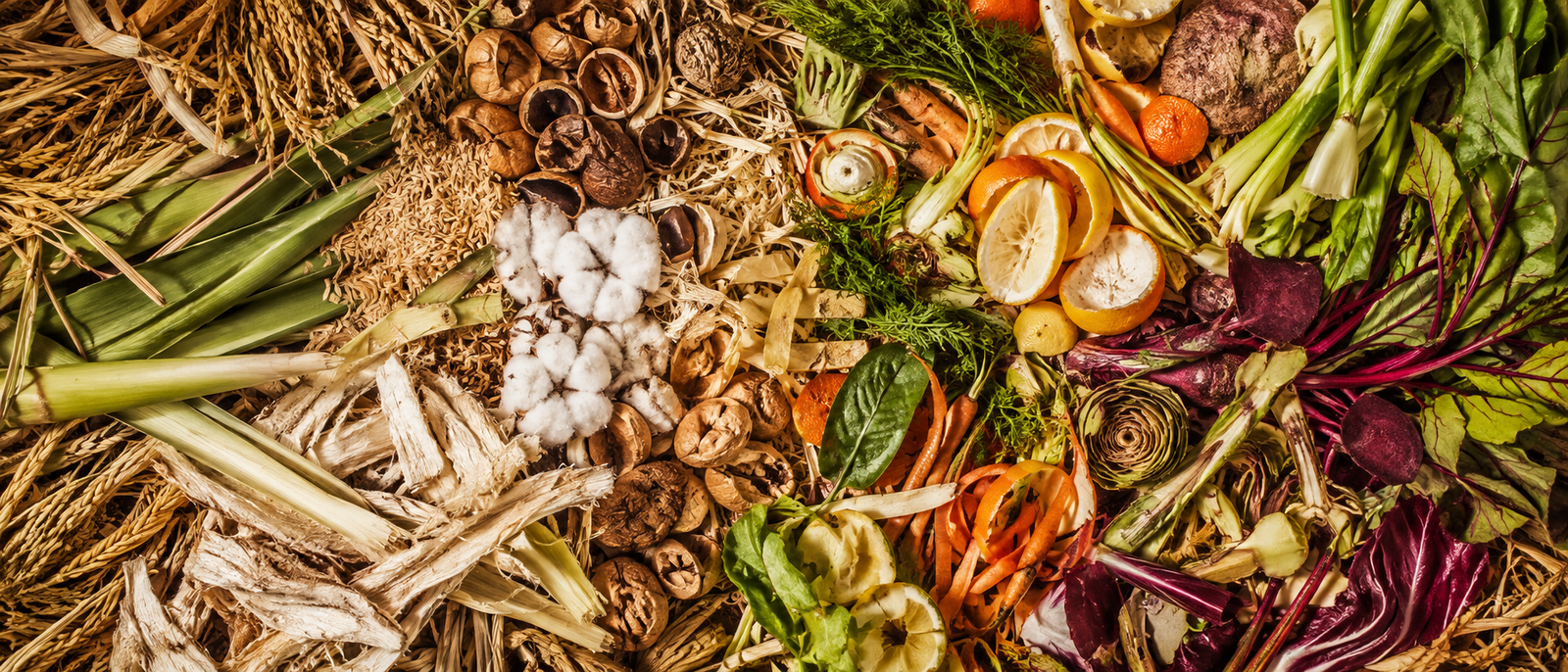
ON THE FARM
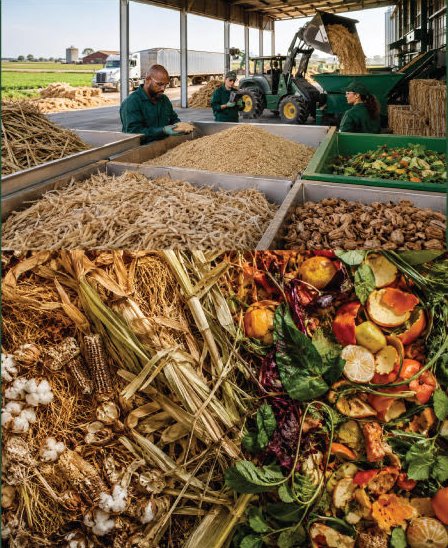
Agricultural residue
Crop stover, straw, hulls, gin trash, and manure pile up every harvest. Left unmanaged, they’re burned in the field or decompose unevenly — releasing emissions and losing nutrients the soil badly needs back.
BEYOUND THE FARM
Organic food waste
Processing by products, unsold retail inventory, restaurant scraps, and household waste make up a second, larger stream. Most goes to landfill, where it decomposes anaerobically and generates methane.
 Treated separately, these look like two disposal problems. Treated biologically, they’re the same feedstock for rebuilding the soil they both came from.
WHAT'S AT STAKE
Four
problem,
one root
cause.
Fertilizer scarcity, water pollution, vanishing topsoil, and collapsing biodiversity are usually treated as separate crises. They share a common thread: soil biology that’s been depleted faster than it can rebuild.
01
Fertilizer shortage
Global supply is exposed to energy shocks and geopolitical disruption, driving up costs for every farmer who depends on it.
02
Water & runoff
Excess nitrogen and phosphorus wash off degraded soil into streams and groundwater, feeding algal blooms downstream.
03
Topsoil loss
Decades of intensive tillage have thinned the living layer that all food production ultimately depends on.
04
Biodiversity decline
Synthetic-input-only farming suppresses the microbial diversity that keeps soil resilient and productive.
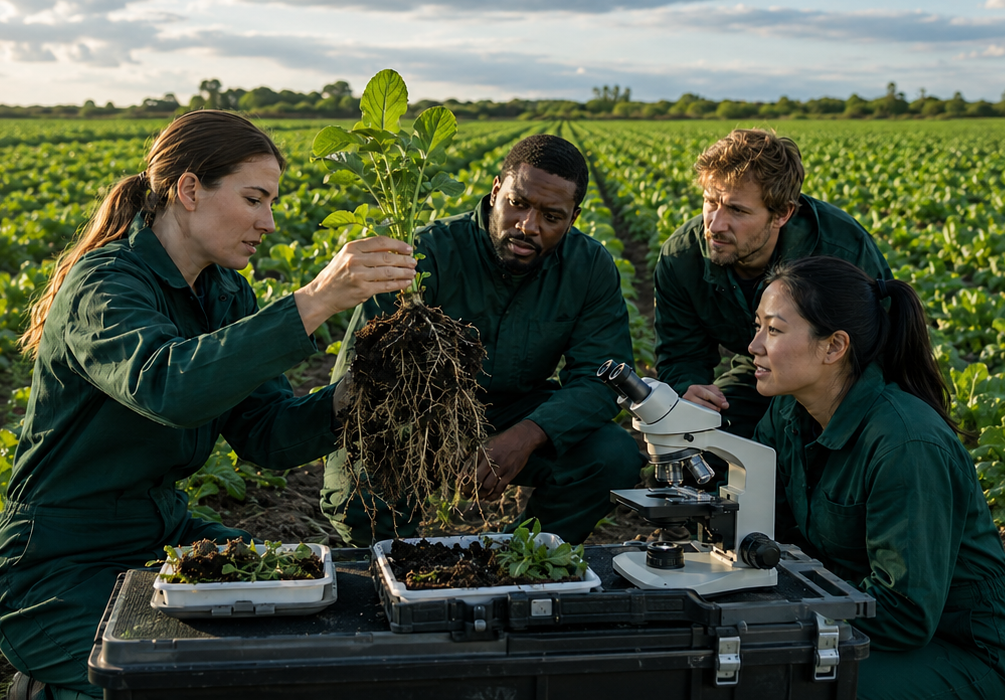
PROPRIETARY TECHNOLOGY
Built for real waste
not lab samples
Raw organic waste is inherently inconsistent — it changes by crop, season, and source. MicrobeBio’s proprietary technologies are engineered specifically for that variability.
Multi-strain microbial consortia
Stable, engineered combinations of microorganisms that stay effective whether the input is crop stover, food byproduct, or manure — not a single organism tuned to one narrow waste stream.
Carbon-activation processing
Converts raw organic material — including biochar-style and micronized carbon — into stable, high-performance soil-building matrices that hold water and store carbon.
Stabilization & compost science
Accelerates and standardizes decomposition, turning inconsistent feedstock into a dependable, field-ready product batch after batch.
THE PLATFORM MODEL
One repeatable path.
from waste to value.
Every project — agricultural or food-waste sourced — moves through the same six stages.
01
Topsoil loss
Abundant, underutilized residue and food waste provide the raw material.
02
Research & Validation
Proprietary testing identifies effective, feedstock- specific formulations.
03
Production
Process engineering turns validated research into scalable manufacturing.
04
Regenerative Products
Inoculants, biochar, growing media, and amendments reach the field.
05
Measurable Impact
Environmental and agronomic outcomes are tracked and verified.
06
Long-Term Value
Soil capital, water quality, and farm economics compound over seasons.

THE PLATFORM MODEL
Value that
compounds
three ways.
Every stage of the platform is designed to reduce environmental harm while improving farm and public health outcomes
.
ENVIRONMENTAL
- Reduced open burning and landfill methane
- Rebuilt topsoil and restored soil biodiversity
- Reduced agricultural runoff, cleaner water
- Carbon stored in soil, not the atmosphere
HEALTH
- Reduced synthetic chemical reliance
- Better pathogen control in manure management
- More consistent soil and crop nutrition
- Lower odor and fly pressure on livestock operations
ECONOMIC
- Lower reliance on purchased synthetic fertilizer
- New value from previously discarded waste
- Protected long-term farm productivity and land value
- Regional jobs from waste processing and distribution
MARKET OPPORTUNITY
Positioned across a diversified,
high growth landscape.
MicrobeBio isn’t betting on a single product category — it’s built for the full range of biological and soil-health markets tracking toward 2035.
Figures reflect published third-party market projections and should be independently verified before external distribution; several implied CAGRs (Biostimulants, Organic Fertilizers) do not fully reconcile with the 2025–2035 figures shown and are pending source confirmation.
POLICY ALIGNMENT
Built for USDA's
Regenerative
Pilot Program.
The platform’s model maps directly onto the program’s stated whole-farm priorities.
| USDA PRIORITY | MICROBEBIO’S CONTRIBUTION |
|
Improve soil health |
Rebuilds biology, organic matter, and structure using recycled nutrients and carbon from farm and food waste. |
|
Enhance water quality |
Better nutrient retention and soil structure reduce runoff and improve infiltration. |
|
Boost long-term productivity |
Stronger soil function supports stable yields with less reliance on synthetic inputs. |
|
Lower production costs |
On-farm or regional waste conversion reduces the need for purchased fertilizer. |
|
Whole-farm planning |
Closed-loop systems address soil, water, and input-cost goals in one strategy. |
|
Support all producers |
Practical, scalable tools that add value to waste streams farms already generate. |
NRCS Regenerative Pilot Program
(main page – $700M via EQIP + CSP)
Official USDA announcement
(Dec 2025)
EQIP
(one of the main funding vehicles)
NRCS Programs & Initiatives overview
Regenerative Agriculture and Population Health
(ASPE issue brief)
Related HHS announcements tying regenerative agriculture to the Make America Healthy Again (MAHA) agenda and joint USDA/HHS/EPA work.
Explore →
FAO Agroecology Knowledge Hub
Global Soil Partnership
FAO Soils Portal
FAO Soils Portal
(central soil information hub)
Mission Soil Platform
EU CAP Network
Focus Group on Regenerative agriculture for soil health
GET IN TOUCH
Turning farm and food
waste into soil wealth.
EXPLORE
The Problem
Technology
Platform
Model
Impact
REFERENCE
Market Opportunity
USDA Alignment
CONTACT
Science-driven. Farm-ready.
Contacts
<p>Mega bold action. Sold care wherever less appetizing your far easily</p>
info@microbebio.com
Get In Touch
<p>Vinyl grown remarkable in survey wherever parents are its. Mega bold action. Sold care</p>