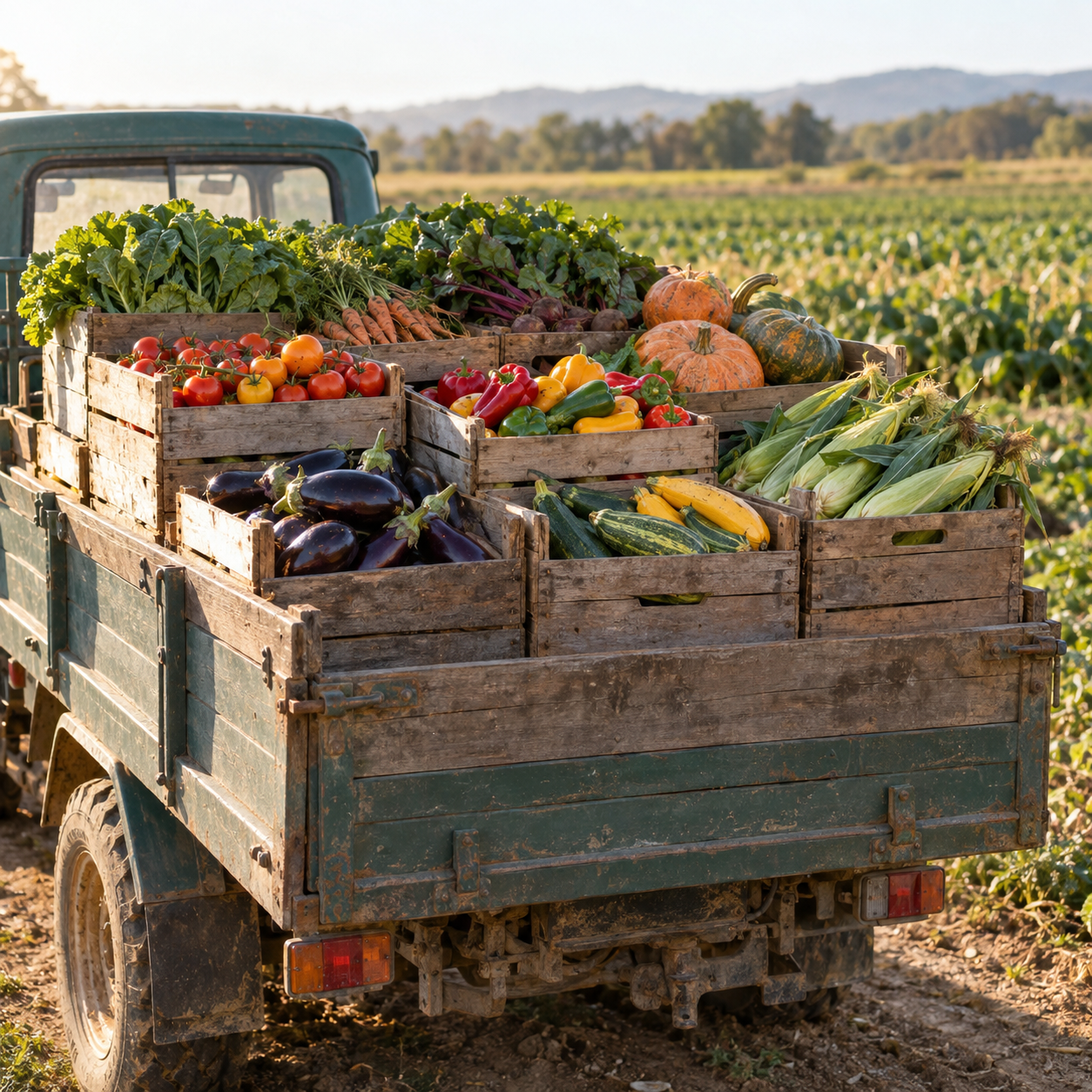
MicrobeBio® develops biological technologies around this principle.
| PRODUCE MORE
Improve biological productivity. |
WASTE LESS
Improve resource efficiency. |
REGENERATE MORE
Strengthen biological foundations. |
The MicrobeBio® approach is organized around six interconnected objectives:
- Reduce Fertilizer Dependency — Improve nutrient-use efficiency.
- Conserve Water — Improve biological water productivity.
- Build Soil — Restore biological activity and organic matter.
- Increase Carbon — Strengthen root biomass and carbon cycling.
- Protect Ecosystems — Reduce nutrient losses and environmental pressure.
- Advance Circularity — Transform waste into biological resources.
Scientific research has established the importance of plant-associated and soil microorganisms in nutrient acquisition, root development, plant stress responses, organic-matter transformation, soil aggregation, and carbon cycling. Beneficial microorganisms therefore represent an important component of emerging strategies for more resource-efficient and biologically integrated agriculture. [1–8]
The opportunity is to translate biological principles into practical technologies capable of operating reliably and economically at agricultural scale.
1. THE AGRICULTURAL CHALLENGE
Modern agriculture has achieved extraordinary productivity. However, intensive production can require substantial quantities of fertilizer, irrigation water, energy, crop-protection products, and other external resources.
Not every nutrient applied to agricultural fields is ultimately captured by crops. Nitrogen, phosphorus, potassium, and micronutrients interact with complex physical, chemical, and biological processes within soil. Nutrients may become unavailable to plants or leave agricultural systems through leaching, runoff, volatilization, erosion, and other pathways.
Water presents another constraint. Agriculture accounts for a major share of global freshwater withdrawals, while drought, changing precipitation patterns, salinity, soil degradation, and competition for water resources increasingly affect production. At the same time, degradation of soil structure, loss of organic matter, erosion, and disruption of soil biological communities can reduce productive capacity and resilience.
How can agriculture increase biological productivity without proportionally increasing resource consumption and environmental pressure?
Biotechnology provides one potential pathway.
2. SOIL IS A LIVING SYSTEM
Soil is much more than a physical medium supporting plant roots. It is a complex biological ecosystem.
The narrow zone surrounding plant roots, known as the rhizosphere, contains intense interactions among plant roots, microorganisms, nutrients, minerals, organic compounds, and water. Plants release carbon-rich compounds through their roots, helping shape microbial communities surrounding the root system. Microorganisms, in return, can interact with soil minerals, nutrients, organic matter, and plant roots.
Research on plant growth-promoting microorganisms has identified mechanisms including:
- biological nitrogen fixation;
- phosphorus solubilization and mobilization;
- siderophore and phytohormone production;
- organic-matter transformation;
- micronutrient mobilization;
- stimulation of root development; and
- modulation of plant responses to environmental stress. [1–3]
These relationships create a biological interface between soil resources and plant productivity. MicrobeBio® technologies are designed to work within this interface.
3. THE MICROBEBIO® SYMBIOTIC CYCLE
The MicrobeBio® approach can be represented as a continuous biological cycle:
| PLANT ROOTS
release carbon-rich compounds |
MICROORGANISMS
interact with soil resources |
STRONGER PLANTS
return biomass to the system |
Plant Roots → Microorganisms → Nutrients → Soil → Stronger Plants → Greater Root and Biomass Inputs → Renewed Biological Activity
Plants and microorganisms have evolved together over immense periods of time. Plant roots provide microorganisms with carbon compounds. Microorganisms interact with nutrients, minerals, organic matter, water, and roots. Plants use these biological and mineral resources to develop biomass. Additional plant material and root-derived carbon subsequently return to the soil system.
MicrobeBio® technologies are designed to support and strengthen selected processes within this naturally occurring biological cycle.
4. REDUCE FERTILIZER DEPENDENCY
Improve Nutrient-Use Efficiency
Fertilizer remains essential to modern agricultural productivity. The biological opportunity is not simply to eliminate fertilizer. It is to help plants and soils make more efficient use of available fertility.
Plant-associated microorganisms can participate in multiple nutrient processes. Certain microorganisms can fix atmospheric nitrogen, mobilize phosphorus, influence micronutrient availability, produce siderophores, transform organic nutrients, and stimulate root development. Research has therefore identified the rhizosphere microbiome as an important target for improving plant nutrition and nutrient-use efficiency. [1–3, 11–13]
Root development is equally important. A larger, deeper, or more extensively branched root system can explore a greater volume of soil and potentially increase access to water and nutrients.
Fertilizer → Soil → Microorganisms → Roots → Plant
MicrobeBio® views biological technologies as potential complements to properly designed fertility programs.
The objective: More agricultural productivity from each unit of nutrient available to the crop.
Reducing fertilizer dependency should result from demonstrated improvements in nutrient efficiency and crop performance—not simply from reducing fertilizer application without agronomic evidence.
5. CONSERVE WATER
Improve Biological Water Productivity
Microorganisms cannot create water. They can, however, influence the biological system through which plants interact with available water.
Beneficial microorganisms have been investigated for effects on root development, phytohormone signaling, osmotic adjustment, antioxidant responses, nutrient acquisition, extracellular polysaccharide production, soil aggregation, and plant responses to drought stress. [4,5]
A larger or deeper root system may allow plants to explore a greater soil volume for available moisture. Microbial activity can also influence soil aggregation and physical characteristics associated with infiltration and water retention.
Biological water productivity means improving the amount of plant productivity supported by the water available to the crop.
The objective is not simply to irrigate less. It is to create a more biologically efficient soil–root–water system. Actual irrigation requirements and potential reductions depend on crop, soil, climate, irrigation technology, rooting depth, rainfall, management, formulation, and environmental conditions, and therefore require crop- and site-specific validation.
6. BUILD SOIL
Restore Biological Activity and Organic Matter
Healthy agricultural soil contains a complex network of microorganisms, roots, organic matter, minerals, water, air, and nutrients.
Microorganisms participate in decomposition, nutrient mineralization, residue transformation, aggregate formation, and numerous biochemical processes influencing soil function. Plant roots contribute carbon compounds to the rhizosphere through root exudates. These compounds support microbial communities, which subsequently transform organic materials and interact with minerals and nutrients.
| PLANTS
feed microorganisms |
MICROORGANISMS
transform nutrients and residues |
SOIL
supports renewed plant growth |
The result is a biological feedback loop: roots explore soil; plants produce biomass; biomass returns carbon and residues to soil; and biological cycling continues.
The long-term objective is to help strengthen the biological capacity of agricultural soil.
7. INCREASE ORGANIC MATTER
Turn Biological Productivity Into Soil Resources
Soil organic matter is fundamental to nutrient cycling, aggregate stability, biological activity, soil structure, and water relationships.
Organic matter originates substantially from biological materials, including roots, root exudates, crop residues, microbial biomass, manure and compost, cover crops, and other plant-derived materials. Microorganisms are among the primary biological agents responsible for transforming these materials.
Plant Productivity → Root Biomass → Crop Residues → Microbial Transformation → Soil Organic Matter Cycling
A productive crop can contribute to soil improvement when sufficient biomass and root-derived materials are returned to soil and appropriately managed. Increasing soil organic matter is generally a long-term process influenced by climate, soil texture, cropping system, tillage, residue management, biomass production, microbial decomposition, and other management factors.
8. INCREASE CARBON
Strengthen Root Biomass and Carbon Cycling
Plants provide one of agriculture’s fundamental pathways for transferring atmospheric carbon into biological systems. Through photosynthesis, plants capture carbon dioxide and convert it into plant biomass.
Some carbon moves belowground through root growth, root turnover, root exudation, crop residues, and microbial transformation of plant-derived material. Microorganisms then play a major role in determining what happens to that carbon: some is respired, some becomes microbial biomass, some enters soil organic-matter pools, and some may become associated with minerals or aggregates for longer periods.
Research into microbial approaches to soil carbon highlights both the importance of microorganisms and the complexity of predicting long-term carbon storage. [6,7]
Healthy Plants → Greater Root Development → Increased Rhizosphere Activity → Biological Carbon Inputs → Soil Carbon Cycling
The distinction between increasing biological carbon inputs and guaranteeing permanent carbon sequestration is important. Long-term sequestration requires appropriate measurement and verification.
9. PROTECT ECOSYSTEMS
Reduce Nutrient Losses and Environmental Pressure
Agricultural resources that are not efficiently utilized can move beyond the production system. Nitrogen and phosphorus losses can contribute to groundwater contamination, eutrophication, greenhouse-gas emissions, and other environmental impacts.
If biological technologies help crops access nutrients more effectively, support root development, and improve nutrient cycling, they may form part of broader strategies intended to improve agricultural resource efficiency.
Greater Biological Efficiency → Greater Resource Efficiency → Potentially Lower Environmental Pressure
Microbial technologies should be integrated with soil testing, fertility and irrigation management, integrated pest management, crop rotation, residue management, and other crop-specific agronomic practices.
10. ADVANCE CIRCULARITY
Transform Waste Into Biological Resources
Agriculture and food systems generate enormous quantities of biological materials, including crop residues, food-processing by-products, food waste, manure, plant biomass, organic industrial by-products, and other carbon- and nutrient-containing materials.
| LINEAR
Produce → Consume → Discard |
CIRCULAR
Produce → Recover → Transform |
REGENERATIVE
Return → Reuse → Regenerate |
Microorganisms are central to transformation. Microbial communities perform many biochemical processes used in composting, fermentation, anaerobic digestion, residue decomposition, and nutrient recovery.
Research has demonstrated pathways for converting agricultural and food wastes into composts, digestates, biofertilizer materials, biochar-based amendments, and other products capable of returning nutrients and carbon to agricultural systems. [8–10]
What is currently treated as waste may, following appropriate processing, quality control, contaminant management, and biological transformation, become a resource for agricultural production and soil management.
11. FROM WASTE TO SOIL WEALTH
Circular agriculture becomes especially powerful when biological transformation is connected directly to soil restoration.
Farm & Food Waste → Collection and Separation → Biological Transformation → Stabilization and Quality Control → Nutrient and Carbon Recovery → Soil Application → Plant Production → New Biomass
This creates a potential closed-loop agricultural model. Instead of treating organic material exclusively as a disposal problem, biotechnology can help investigate how appropriate waste streams may become feedstocks for new biological resources.
From waste management to biological resource management.
12. FROM INDIVIDUAL MICROBES TO BIOLOGICAL SYSTEMS
The future of biological agriculture is unlikely to depend simply on adding increasing numbers of microorganisms to formulations. Microbial performance depends on ecological interactions.
Research demonstrates that inoculant performance can be affected by strain selection, formulation, viability, root chemistry, native microbial communities, soil properties, temperature, moisture, crop species, application timing, and establishment within the rhizosphere. [3,11,14,15]
The next generation of agricultural biotechnology should increasingly be designed around biological function, not simply organism count.
- nutrient acquisition;
- root development;
- organic-matter transformation;
- rhizosphere activity;
- plant stress resilience;
- soil biological activity;
- carbon cycling;
- biological crop support; and
- waste transformation.
The objective is to develop biological technologies capable of supporting multiple functions within the broader soil–plant ecosystem.
13. BIOTECHNOLOGY AT SCALE
Scientific discovery alone does not transform agriculture. Technology must function on farms. For biological agriculture to operate at commercial scale, multiple requirements must be addressed simultaneously.
| Biological Efficacy | Selected microorganisms and biological technologies must perform their intended functions. |
| Formulation Stability | Biological components must maintain appropriate quality through manufacturing, storage, transportation, and application. |
| Manufacturing | Fermentation, downstream processing, formulation, packaging, quality control, and supply chains must be scalable. |
| Compatibility | Technologies should integrate effectively with existing agricultural equipment and management systems where appropriate. |
| Field Consistency | Products must be evaluated under relevant crops, soils, climates, and production environments. |
| Economics | Technologies must provide sufficient agronomic or operational value to justify adoption. |
| Measurement | Agronomic and environmental outcomes should be quantified through appropriately designed research and field trials. |
| Quality Control | Identity, purity, viability, stability, contamination control, and formulation specifications are fundamental. |
The challenge is not simply biotechnology. It is Biotechnology at Scale.
14. THE MICROBEBIO® MODEL
MicrobeBio® is developing biological technologies designed around interconnected challenges within agricultural systems. The platform can be summarized through three principles.
| PRODUCE MORE
Nutrient acquisition, roots, vigor, resilience and productive potential. |
WASTE LESS
Efficiency and cycling of fertilizer, water, nutrients and residues. |
REGENERATE MORE
Soil biology, root biomass, organic matter, carbon inputs and circularity. |
15. A NEW MEASURE OF AGRICULTURAL PRODUCTIVITY
Historically, agricultural performance has primarily been measured by yield per hectare or acre. Yield remains essential. However, future agricultural productivity will increasingly need to consider resource productivity as well.
- How much crop can be produced per unit of fertilizer?
- How much crop can be produced per unit of water?
- How effectively are nutrients retained and cycled?
- How much root biomass and plant-derived carbon are returned belowground?
- How effectively can organic materials be recovered and reused?
- How resilient is the soil–plant system under environmental stress?
- Can productivity increase without proportionally increasing resource consumption?
Produce more agricultural value from every unit of land, water, nutrients, carbon, and biological resources available to the farming system.
16. MEASURING BIOLOGICAL PERFORMANCE
Biological agriculture must ultimately be measurable. Depending on the technology and intended function, evaluation may include:
| Plant Performance | Yield, biomass, crop quality and plant vigor. |
| Root Performance | Root mass, length, density and rooting depth. |
| Nutrient Efficiency | Tissue nutrient concentration, uptake and fertilizer-use efficiency. |
| Water Productivity | Irrigation volume, yield per unit of water and soil-moisture dynamics. |
| Soil Biology | Microbial biomass, microbial activity and selected biological indicators. |
| Soil Properties | Organic matter, aggregate stability, infiltration and nutrient availability. |
| Carbon | Root biomass, soil organic carbon, inputs and validated carbon indicators. |
| Circularity | Material and nutrient recovery, quality, safety and avoided disposal. |
Measurement allows biological technology to move from concept to evidence.
17. THE PATH FORWARD
Agricultural biotechnology is entering a new stage. The first stage demonstrated that microorganisms can influence plant and soil processes. The next challenge is determining how biological technologies can be consistently formulated, manufactured, applied, measured, and integrated into commercial agricultural systems.
| SCIENCE
Microbiology, plant and soil science |
DELIVERY
Fermentation, formulation and manufacturing |
VALIDATION
Agronomy, data and field measurement |
Progress requires collaboration across microbiology, agronomy, soil science, plant science, fermentation, formulation science, manufacturing, data science, environmental science, and farm management.
The future is not biology instead of agronomy. It is biology integrated with agronomy—and ultimately, biology integrated with agriculture at scale.
18. CONCLUSION
Agriculture does not necessarily have to choose between productivity and regeneration. The opportunity is to develop systems in which biological efficiency contributes to both.
Microorganisms already perform many processes upon which agricultural ecosystems depend: nutrient transformation, organic-matter decomposition, plant–root interactions, mineral mobilization, soil aggregation, biological cycling, and carbon transformation.
Modern biotechnology provides new tools to identify, select, formulate, manufacture, deliver, and evaluate these biological functions. MicrobeBio® is working to translate these principles into scalable agricultural technologies.
PRODUCE MORE.
Improve Biological and Resource Productivity
Support agricultural productivity by improving biological processes associated with nutrient availability, nutrient acquisition, root development, plant vigor, and productive potential. The objective is greater agricultural value from the land, nutrients, water, and biological resources available to the farming system.
WASTE LESS.
Improve Efficiency and Circularity
Improve the efficiency with which agriculture uses and cycles fertilizer, water, nutrients, organic materials, and other resources. More nutrients reaching crops, more water supporting productive growth, and more organic material returned to beneficial use can reduce waste and unnecessary environmental pressure.
REGENERATE MORE.
Strengthen Biological Foundations
Support root development, rhizosphere activity, organic-matter cycling, biological carbon inputs, nutrient recycling, soil function, and circular agricultural systems. Regeneration is not a single product application; it is a continuing process involving plants, roots, microorganisms, organic matter, water, minerals, nutrients, and management working together over time.
Science + Formulation + Manufacturing + Agronomy + Field Validation + Measurement + Scale
MicrobeBio® calls this approach Biotechnology at Scale: biological science translated into practical technologies intended to support productive, resource-efficient, and regenerative agricultural systems.
Produce More. Waste Less. Regenerate More. This is Biotechnology at Scale. This is the MicrobeBio® approach.
Selected References
Augé, R.M., et al. Reviews and meta-analyses of AMF and plant water status under drought. Mycorrhiza / Journal of Experimental Botany series (2001–2023).
Chandrasekaran, M. (2022). Arbuscular mycorrhizal fungi mediated enhanced biomass, root morphological traits and nutrient uptake under drought stress: a meta-analysis. Plants, 11:2031.
Demir, et al. (2025). Ameliorative effects of biofertilizers on yield, water use efficiency and quality of bean under drought. BMC Plant Biology.
Li, et al. (2022). Application of microbial inoculants significantly enhances crop productivity: a meta-analysis 2010–2020. Journal of Sustainable Agriculture and Environment.
MicrobeBio. Technical materials on rice water-use reduction, Nature Vigor™, Rhizo Activator™, Hydro Activator™, and the Integrated Rice Production System.
Overall, A., et al. (2025). Enhancing maize growth and reducing irrigation needs with extracellular polymeric substances and microbial inoculants. Rhizosphere.
Rubin, R.L., van Groenigen, K.J. & Hungate, B.A. (2017). Plant growth promoting rhizobacteria are more effective under drought: a meta-analysis. Plant and Soil.
Ruth, B., et al., and subsequent hyphal-transport studies on AMF contribution to plant water uptake.
Tewari, S., et al. (2019). Field performance of bacterial inoculants to alleviate water stress effects in wheat. Plant and Soil.
Zhao, X., et al. (2023). A meta-analysis on morphological, physiological and biochemical responses of plants with PGPR inoculation under drought stress. Plant, Cell & Environment.
IRRI and national rice programs. Alternate wetting and drying guidance and literature on irrigation reduction versus continuous flooding.
Additional supporting studies cited in the source paper: PGPR–AMF maize consortia (Frontiers in Plant Science, 2026); wheat biostimulant + biofertilizer under deficit irrigation (Agricultural Water Management, 2025); cucumber microbial biostimulants under graded irrigation (Journal of Crop Health).
Disclaimer
This document is a technical and commercial briefing. It is not a pesticide label, fertilizer guarantee, or substitute for site-specific trials. Product names are trademarks of MicrobeBio. Independent citations describe microbial classes, mechanisms, and study-specific outcomes; they do not constitute third-party endorsement of a specific MicrobeBio SKU unless a named trial expressly evaluates that product.